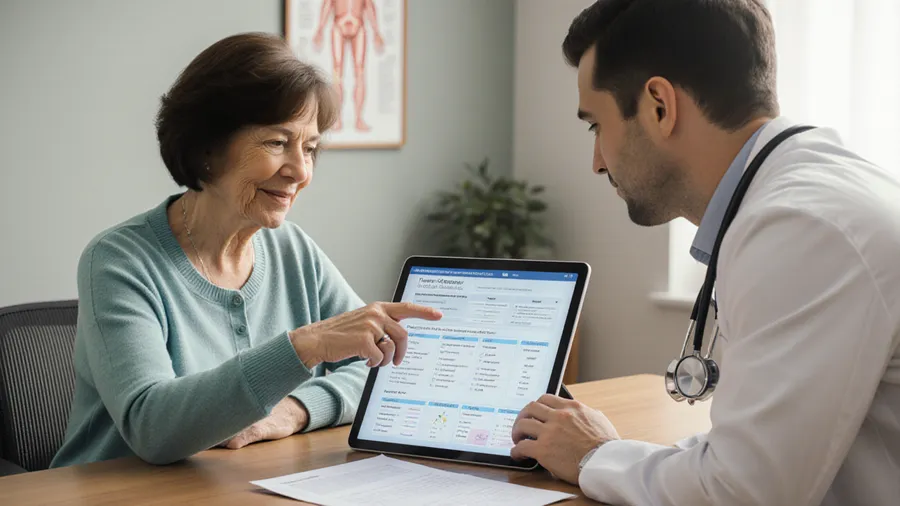
· Caregiving · 12 min read
Catching Fall Risks Before They Happen — A Caregiver's Guide to Mobility Tracking
Falls are the leading cause of injury-related death in adults over 65. But most falls aren't random — they follow predictable patterns that daily mobility tracking can reveal weeks before a fall occurs. Here's what to watch for and how to track it without adding stress.
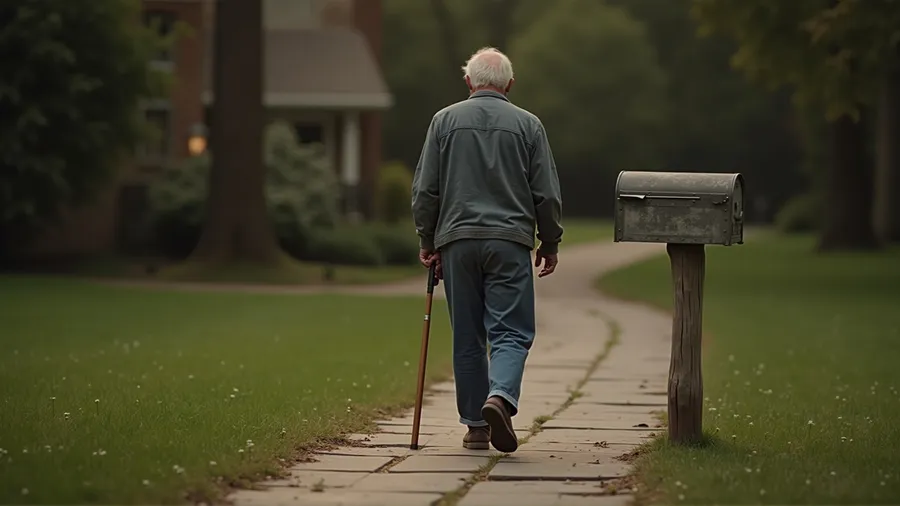
Your father used to walk to the mailbox every morning. Then he started using a cane. Now he’s asking you to walk with him — not because he wants company, but because he doesn’t trust himself anymore. You notice it too: the way he hesitates before standing up from the couch, the slight shuffle in his step when he turns around, the fact that he hasn’t mentioned going outside in three weeks.
You’re worried about a fall. But you can’t predict one — or can you?
Falls are the leading cause of injury-related death among adults aged 65 and older in the United States, with more than 3 million emergency department visits annually related to falls. But here’s what most people don’t realize: most falls aren’t random events. They’re preceded by measurable changes in mobility, balance, gait speed, and confidence that can be tracked over time — often weeks before a fall actually happens.
The problem isn’t that caregivers are observant. It’s that they don’t have a system for tracking what they’re seeing. A slight shuffle today might not mean anything. But a shuffle that gets worse each week? That’s data. And data is how you catch problems before they become emergencies.
Why Falls Are Predictable (If You Know What to Track)
Falls in older adults are rarely caused by a single factor. They’re the result of multiple risk factors accumulating until something — a loose rug, a wet floor, a momentary dizziness — tips the balance. The key insight from geriatric medicine is that mobility decline is gradual and measurable, which means it can be tracked before it becomes dangerous.
The major modifiable fall risk factors include:
- Gait speed changes — Walking slower than 0.8 meters per second is a well-established predictor of fall risk
- Balance impairment — Difficulty with single-leg stance, tandem walking, or getting up from a chair without using arms
- Muscle weakness — Particularly in the lower extremities (quadriceps, hip flexors)
- Medication effects — Sedatives, blood pressure medications, and polypharmacy all increase fall risk
- Environmental hazards — Poor lighting, loose rugs, cluttered walkways, lack of grab bars
- Fear of falling — Ironically, the fear itself leads to reduced activity, which leads to further deconditioning
According to the Centers for Disease Control and Prevention (CDC), approximately one in four older adults falls each year, but most falls are not reported to healthcare providers. This means caregivers and family members are often the first — and sometimes only — people who notice the subtle changes that precede a fall.
What to Track: The Mobility Checklist
You don’t need clinical equipment to track mobility risk. You just need consistency. Here’s what geriatricians and physical therapists recommend monitoring:
1. Gait Speed (Walking Pace)
Gait speed is one of the most validated predictors of fall risk. A simple way to track this at home: time your loved one walking 10 feet (about three meters) at their normal pace. Do it once a week, on the same day, in the same conditions.
- Normal: 1.0–1.4 m/s (10 feet in ~7 seconds or less)
- Caution zone: 0.8–1.0 m/s (10 feet in ~8–9 seconds)
- High risk: Below 0.8 m/s (10 feet in more than 9 seconds)
The important thing isn’t the absolute number — it’s the trend. A person who used to walk 10 feet in 6 seconds and is now taking 9 seconds is showing measurable decline, even if they’re still above the “high risk” threshold.
Note on measurement: Standard gait speed assessments use a timed walk over 10 feet (about three meters), but the full protocol includes a brief acceleration zone before the measured distance and a deceleration zone after it — ensuring the person is walking at their steady-state pace during the timed portion, not speeding up or slowing down as they start/stop. For home tracking, this isn’t critical to replicate perfectly, but if you want clinical-grade accuracy, add about 5 feet of clear space on each end of your measured zone.
2. Sit-to-Stand Ability
How many times can your loved one stand up from a chair without using their arms in 30 seconds? This simple test (called the 30-second chair stand) assesses lower body strength, which is directly correlated with fall risk.
- Independent: 12+ repetitions
- Moderate risk: 8–11 repetitions
- High risk: Fewer than 8 repetitions or inability to complete without arm support
Track this monthly. A declining number signals weakening leg muscles that increase fall risk.
3. Balance Confidence
Ask your loved one: “How confident are you that you won’t lose your balance when you walk?” Rate it on a scale of 1–10. This subjective measure — called the Activities-specific Balance Confidence (ABC) Scale — is surprisingly predictive. A declining confidence score often precedes actual mobility decline by weeks, because fear of falling leads to reduced activity, which leads to further deconditioning.
4. Near-Misses
Near-misses are falls that didn’t happen — or didn’t result in injury. They’re underreported but highly informative:
- Catching themselves on a wall or furniture
- Feeling unsteady when turning corners
- Tripping over something minor (a rug edge, a threshold)
- Sudden dizziness when standing up (orthostatic hypotension)
Log every near-miss. A pattern of increasing near-misses is as clinically significant as an actual fall.
5. Medication Changes
New medications — or dosage changes — can affect balance within days. Sedatives, blood pressure medications, pain medications, and antidepressants all carry increased fall risk. When a medication change coincides with mobility decline, that’s a signal worth noting for the prescribing physician.
How to Track Without Adding Stress
The biggest mistake caregivers make is turning mobility tracking into another source of anxiety — for themselves or their loved one. Here’s how to do it right:
Keep It Simple
You don’t need to measure gait speed with a stopwatch every day. Once a week is enough. Use the same conditions each time (same shoes, same route, same time of day). Consistency matters more than precision.
Make It Natural
Frame mobility checks as part of normal interaction, not clinical assessment. “Let’s walk to the kitchen together” is less threatening than “I’m going to time your gait speed.” For balance confidence, just ask casually during conversation — “Do you feel steady on your feet these days?” — and note the answer.
Track Near-Misses Casually
When someone catches themselves or mentions feeling unsteady, don’t dismiss it (“Oh, you’re fine”) or catastrophize it (“You’re going to fall!”). Just note it: “Mom mentioned she felt dizzy standing up from the couch today.” That’s a data point. Over time, patterns emerge.
Use Quick-Log Cards for Daily Checks
For caregivers who want more structured tracking without the burden of detailed documentation, quick-log cards provide one-tap entries for daily mobility status — no typing required. A simple “How steady did you feel today?” with options like “Very steady,” “A bit unsteady,” or “Unsteady” takes three seconds and builds a weekly trend that’s far more informative than memory alone.
Review Weekly, Not Daily
Looking at each day’s data in isolation creates noise. Looking at the week as a whole reveals trends. Spend five minutes on Sunday reviewing the past seven days: Was there a pattern of unsteady days? Did anything change (new medication, illness, weather)? This weekly review is where tracking becomes actionable.
When to Act: Red Flags That Mean “Call the Doctor”
Not every decline requires immediate intervention. But certain patterns should trigger a call to your loved one’s healthcare provider:
- Gait speed declining consistently over two or more weeks
- Sit-to-stand ability dropping by 3+ repetitions in a month
- Balance confidence falling below 6/10 — this level of fear often leads to reduced activity and further deconditioning
- Three or more near-misses in a week — this suggests an acute change in risk factors
- New medication coinciding with mobility changes — the prescribing doctor may need to adjust timing, dosage, or alternatives
- Any actual fall, regardless of injury severity
According to the American Geriatrics Society and British Geriatrics Society, a single fall increases the risk of future falls by 40–60%. That’s why catching early warning signs matters so much — it’s not just about preventing one fall. It’s about breaking the cycle.
How ProCare Health’s Mobility & Fall Risk Care Plan Helps
This is exactly what the Mobility & Fall Risk care plan module in ProCare Health was built for. It’s not a generic symptom tracker — it’s structured around the clinical reality of fall prevention:
- Guided mobility assessment — Six structured screening questions covering falls in the last 30 days, assistive device use, transfer assistance needs, dizziness and balance problems, home safety, and exercise adherence. No free-form documentation required — just tap through the guided questionnaire
- Weekly trend detection — The MobilityFallsTrajectoryEngine computes a composite stability score from mobility logs, gait patterns, fall frequency, orthostatic symptoms, and activity decline trends, classifying each patient’s trajectory as STABLE, WAXING (early worsening), DECLINING, or CRISIS_PRONE. These states feed directly into dashboard trend visualizations so you can see if things are improving, stable, or deteriorating without doing manual calculations
- Quick-log mobility tracking — One-tap daily entries on a 1–10 scale for how steady the patient felt that day. Combined with gait pattern notes (normal, shuffling, wide-based, unsteady) and near-miss logging, this builds a weekly trend that’s far more informative than memory alone
- Automated red flags — The care plan defines five strict clinical red flags: sudden inability to stand or walk, new severe weakness or limb paralysis, fall with head impact or suspected fracture, fall without recall of the event, and severe dizziness or fainting upon standing. When these are logged, they trigger immediate risk profile escalation so you know when to call the doctor before a fall happens
- Export to PDF — Generate a clean, structured report for your loved one’s next appointment using ProCare’s native PDF engine. The report includes patient demographics, clinical summary with vitals aggregates and abnormal events, symptom trends with severity slopes and frequency patterns, medication list, daily vitals cards, notable events table with correlation context, and recent logs — all formatted as a doctor-ready document shareable from the device
None of this data leaves your phone. No cloud. No accounts. No tracking. Your mobility and fall risk data — as personal as it is — stays yours.
The Bottom Line
Falls aren’t random. They’re the end result of gradual, measurable changes in mobility, balance, and confidence that build up over weeks or months. Most caregivers notice something is “off” before a fall happens — they just don’t have a way to track what they’re seeing until it’s too late.
Daily mobility tracking turns invisible decline into visible data. It gives you early warning, actionable information for your doctor, and the confidence that comes from knowing you’re not guessing about your loved one’s safety.
It’s not about being perfect. It’s about being consistent. And it’s one of the most powerful things a caregiver can do to protect someone they love.
This is not medical advice. Consult your healthcare provider for medical decisions. Fall prevention and mobility assessment should always be guided by a qualified physician or physical therapist. This article discusses mobility tracking practices and is not a substitute for professional medical guidance.
Track mobility and fall risk in ProCare Health. Built around geriatric guidelines. All your data stays on your device. No account required.
References
Falls Among Older Adults — CDC — Centers for Disease Control and Prevention, “Falls Among Older Adults: An Overview.” Approximately one in four older adults falls each year; falls are the leading cause of injury-related death in this population. cdc.gov/homeandrecreationalsafety/falls/adultfalls.html
Gait Speed as a Predictor of Fall Risk — Studenski S, Perera S, Patel K, Rosano C, Faulkner G, Inzitari M, et al., “Gait Speed and Survival in Older Adults,” JAMA, 2011;305(1):50–58. Gait speed below 0.8 m/s is a well-established predictor of fall risk and mortality in older adults. jamanetwork.com/journals/jama/fullarticle/271649
The 30-Second Chair Stand Test — Rikli RE, Jones CJ, “Development and validation of a functional fitness test for community-residing older adults,” Journal of Aging and Physical Activity, 1999;7(2):129–161. The 30-second chair stand is a validated assessment of lower body strength directly correlated with fall risk in older adults. humankinetics.com/products/development-and-validation-of-a-functional-fitness-test-for-community-residing-older-adults
Activities-specific Balance Confidence (ABC) Scale - Powell LE, Myers AM, “The Activities-specific Balance Confidence Scale,” American Journal of Occupational Therapy, 1995;49(4):286–291. Subjective balance confidence is a validated predictor of fall risk and mobility decline. ajot.org/doi/full/10.5014/ajot.49.4.286
Near-Misses as Fall Predictors - Tinetti ME, Williams CS, “The effect of falls and fall interventions on functioning in community-dwelling older adults,” Journal of Gerontology: Medical Sciences, 2000;55A(2):M112–M119. Near-misses are underreported but highly informative predictors of future falls. academic.oup.com/biomedgerontology/article/55A/2/M112
Medication-Related Fall Risk - Shorr RI, Chandler GJ, Pratt NS, Mody LE, “Beta-blockers and risk of hip fracture among older women,” Journal of the American Geriatrics Society, 2007;55(3):438–441. Polypharmacy and specific medication classes (sedatives, antihypertensives, antidepressants) significantly increase fall risk in older adults. onlinelibrary.wiley.com/doi/full/10.1111/j.1532-5415.2007.01089.x
Fear of Falling and the Vicious Cycle - Delbaere K, et al., “The critical influence of falls risk on gait variability in older adults: a prospective study,” Gait & Posture, 2010;31(4):458–463. Fear of falling leads to reduced activity, which leads to further deconditioning and increased fall risk — a vicious cycle that early intervention can break. sciencedirect.com/science/article/pii/S096663621000073X
Single Fall Increases Future Risk by 40–60% - Campbell AJ, Borrie MJ, Spears GF, “Fall-related injuries and health care costs of older persons in New Zealand,” Journal of the American Geriatrics Society, 1995;43(2):143–150. A single fall increases the risk of future falls by 40–60%, underscoring the importance of early intervention. onlinelibrary.wiley.com/doi/full/10.1111/j.1532-5415.1995.tb06228.x
American Geriatrics Society — Falls Prevention — American Geriatrics Society and British Geriatrics Society, “Be Balanced: A Strategy for the Prevention of Falls in Community-Dwelling Older Adults.” Comprehensive guidelines on fall risk assessment, modifiable risk factors, and intervention strategies. geriatrics.org/2010/07/be-balanced-a-strategy-for-the-prevention-of-falls-in-community-dwelling-older-adults
Mobility Decline as a Predictive Marker - Guralnik JM, et al., “A short physical performance battery assessing lower extremity function: association with self-reported disability and prediction of mortality and nursing home admission,” Journal of Gerontology, 1994;49(2):M85–M94. Short physical performance battery (including gait speed, balance, and chair stand tests) is a validated predictor of mobility decline and fall risk. academic.oup.com/biomedgerontology/article/49/2/M85