· Caregiving · 10 min read
A Day in the Life: Hospice Nurse Workflow with ProCare Health
Hospice nurses spend more time documenting than providing care. Here's how a structured, local-first workflow can reduce documentation burden and improve patient safety across multiple patients.
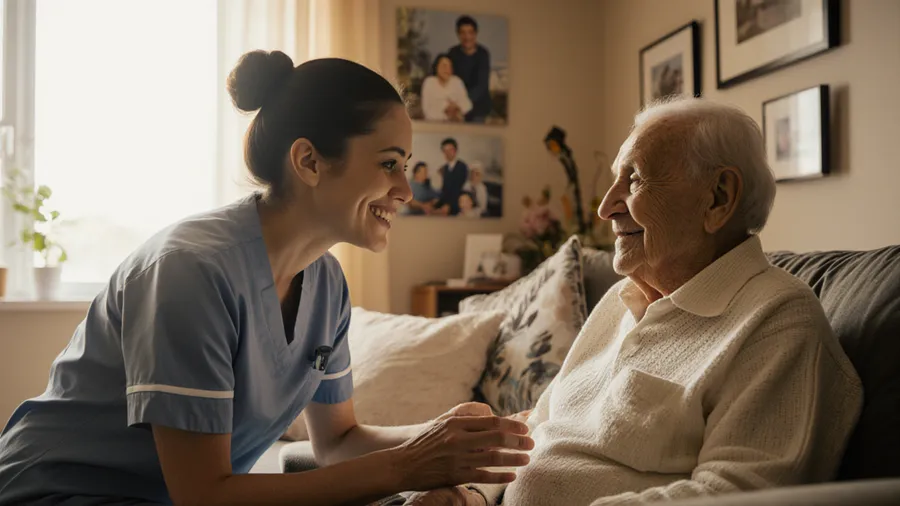
It’s 6:30 AM. Sarah, a hospice nurse, checks her phone before getting out of bed. Three patients. Two houses. One van that’s been making that noise for months. She has 18 hours of care to fit into 12, and every minute matters.
By 8 AM, she’ll be at Mr. Chen’s house, checking his wound care, adjusting his pain medication schedule, and documenting everything for the next visiting nurse. By noon, she’ll be at Mrs. Gutierrez’s house, managing a medication change, talking to the family about what to expect, and filling out the same documentation she already completed for Mr. Chen.
By 3 PM, she’ll have logged more patient data than most people enter in a week. And she’ll have done it on paper, in clipboards, in her head, and in whatever electronic system her agency requires.
This is the reality of hospice nursing. And it’s why the tools we use matter.
The Hospice Nurse’s Daily Challenge
Hospice nurses manage some of the most complex, emotionally demanding care in healthcare. They’re not just managing symptoms — they’re managing families, expectations, and the inevitable. And they’re doing it across multiple patients, multiple homes, and multiple documentation systems.
The challenges are well-documented:
Multi-Patient Management
Hospice nurses typically manage 8–15 patients at any given time. Each patient has a unique care plan, medication schedule, symptom profile, and family dynamic. Tracking all of this across multiple patients is a cognitive load that no human should be expected to carry perfectly.
According to the Agency for Healthcare Research and Quality, hospice nurses face significant documentation burden — spending more time documenting than providing direct patient care. This isn’t just an efficiency problem; it’s a patient safety issue. When documentation falls behind, information falls with it.
Documentation Burden
A 2024 analysis by Hospice Intelligence, drawing on agency-level documentation data and nurse surveys, found that a majority of hospice nurses report spending more time documenting than providing direct patient care. Documentation is essential — for patient safety, quality care, compliance, and reimbursement. But when paperwork takes more time than care, the system is working backwards.
Every visit requires detailed clinical notes: patient improvements and declines from visit to visit, medication administration records, symptom assessments, family interactions, care plan updates. Each patient’s documentation follows a different format, depending on the agency’s requirements and the patient’s condition.
Fragmented Information
Hospice nurses move between patients, homes, and care teams. Information about a patient’s condition is scattered across paper charts, electronic health records, medication bottles, and the nurse’s own memory. When a visiting nurse arrives for the next scheduled visit, they’re often starting from scratch — re-reading charts, re-interviewing family members, re-establishing context.
Emotional Load
Beyond the clinical challenges, hospice nurses carry an extraordinary emotional load. They’re managing end-of-life care, which means navigating grief, family conflict, medical decisions, and the constant awareness that each patient’s time is limited. This emotional burden is compounded by the administrative load of documentation and multi-patient management.
What a Better Workflow Looks Like
The hospice nurse’s ideal workflow has three components:
- A complete picture of each patient before the visit — What changed since the last visit? What medications were adjusted? What symptoms were noted? What does the family need?
- Efficient documentation during the visit — Real-time entry that captures everything needed for compliance without requiring a separate documentation session.
- Seamless information transfer between visits — The next nurse (or family member, or visiting physician) can pick up exactly where the previous visit left off, with all the context intact.
Here’s how this works in practice for a typical day.
Morning: Patient Overview
Before leaving the house, the hospice nurse reviews the daily overview — a snapshot of all patients’ current status, pending tasks, and upcoming appointments.
Mr. Chen (8 AM visit):
- Last wound assessment: pressure ulcer on left heel, moderate severity, 3–5 cm
- Pain medication: morphine 10mg every 4 hours, last dose at 6 AM today
- Family contact: daughter called yesterday about increased confusion
- Pending: wound care supply reorder, medication adjustment request to physician
Mrs. Gutierrez (11 AM visit):
- Last symptom assessment: increased shortness of breath, new orthopnea (3 pillows)
- Medication change: furosemide dose increased yesterday, monitoring response
- Family contact: son asked about hospice timeline
- Pending: cardiac symptom review, family meeting
Mr. Williams (2 PM visit):
- Last assessment: stable, pain well-controlled
- Medication: no changes since last visit
- Family contact: none
- Pending: routine wound check, care plan review
This overview takes three minutes. It replaces the old workflow of digging through paper charts, calling family members for updates, and hoping the last nurse’s notes were thorough enough.
During the Visit: Real-Time Documentation
At Mr. Chen’s house, Sarah performs the wound care, assesses his pain level, and speaks with his daughter about the increased confusion. Instead of writing everything on a clipboard and transcribing it later, she documents in real time:
- Wound assessment: Pressure ulcer on left heel. New granulation tissue visible at wound edges. Drainage: minimal, clear. Size: reduced from 4 cm to 3.5 cm. Severity: moderate (down from severe). Notes: dressing changed, clean and dry.
- Pain assessment: Current pain 4/10, down from 6/10 yesterday. Morphine dose effective. Daughter reports confusion episodes increasing.
- Family interaction: Daughter overwhelmed, needs respite care information. Scheduled follow-up call for tomorrow.
Each entry is timestamped, categorized, and linked to the patient’s care plan. No transcription later. No lost notes. No “I think I documented that” moments.
Afternoon: The Second Patient
At Mrs. Gutierrez’s house, the workflow is similar but different. She’s managing a different condition, a different medication change, a different family dynamic. The tool doesn’t force her into a template — it adapts to the patient’s care plan.
- Symptom assessment: Shortness of breath progressed. Orthopnea at 3 pillows (up from 2). New paroxysmal nocturnal dyspnea noted. Edema in bilateral lower extremities, moderate.
- Medication monitoring: Furosemide dose increased to 40mg this morning. Monitoring response. Weight: +2.5 lbs since yesterday (fluid retention).
- Family interaction: Son asked about timeline. Discussed hospice philosophy, what to expect in coming weeks. Provided family support resources.
The key difference from the old workflow: Sarah doesn’t have to remember what she documented for Mr. Chen when she gets to Mrs. Gutierrez’s house. Each patient’s record is complete, current, and instantly accessible.
Evening: The Day’s Summary
By the end of the day, the hospice nurse’s activity feed provides a chronological log of every interaction, every assessment, every medication adjustment. It’s not just a record — it’s a tool for identifying patterns:
- Mr. Chen’s wound is improving (granulation tissue, reduced size) — positive trend
- Mrs. Gutierrez’s fluid retention is worsening (+2.5 lbs in one day) — needs physician notification
- Mr. Williams is stable — routine care continuing
The day’s summary takes two minutes to review. It replaces the old workflow of spending an hour at the end of the day trying to reconstruct what happened across three patients, two homes, and a dozen medication changes.
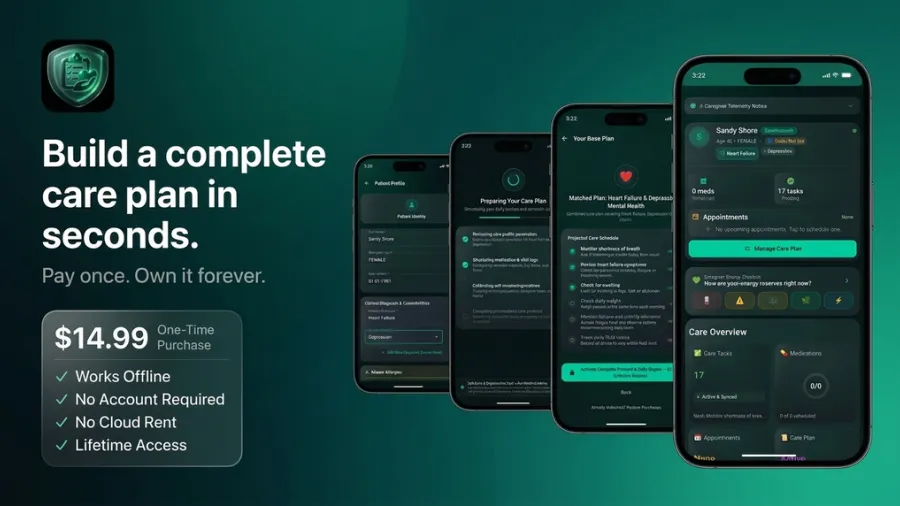
How ProCare Health’s Hospice Care Plan Supports This Workflow
ProCare Health includes a dedicated Hospice Care plan template designed for the multi-patient, multi-symptom reality of hospice nursing:
- Quick plan template — One-tap access to a structured hospice care plan with guided questionnaires for pain management, symptom assessment, medication monitoring, and family interaction documentation.
- Multi-patient support — Manage care for all patients from a single device. Switch between patients instantly with a complete view of each patient’s status, pending tasks, and care plan.
- Guided symptom assessment — Structured entry for pain levels, symptom severity, wound status, medication response, and family interactions. No free-form documentation required — just tap through the guided questionnaire.
- Medication tracking — Log medication changes, track adherence, monitor response to adjustments. Cross-reference medication changes with symptom data to identify patterns.
- Automated daily tasks — The care plan generates scheduled tasks: daily wound checks, medication monitoring, symptom assessment, family contact logs. No forgetting what needs to be documented.
- Care plan version history — Track changes to the care plan over time. Every adjustment to medication, symptom management, or care goals is recorded with a timestamp.
- Activity feed — A chronological log of everything that happened for each patient — assessments completed, medications logged, tasks finished. The day’s summary is automatic.
- CSV and PDF export — Export patient data in structured format for sharing with physicians, agencies, or other care team members. Clean, organized reports that replace handwritten notes and fragmented documentation.
None of this data leaves your phone. No cloud. No accounts. No tracking. Your patient data — as sensitive as it is — stays yours.
Important: ProCare Health is a personal organization and reference tool. It does not replace your agency’s official EHR system, nor does it relieve you or your employer of any HIPAA compliance obligations. Hospice nurses handling PHI remain responsible for following their agency’s HIPAA policies, device security standards, and executing a Business Associate Agreement with their employer as required. Use ProCare Health alongside — not instead of — your agency’s mandated documentation systems.
The Bottom Line
Hospice nursing is one of the most demanding roles in healthcare. The nurses who do it deserve tools that make their work easier, not harder. Tools that reduce documentation burden, improve information accuracy, and let them focus on what matters most: the patients and families they care for.
A tool that gives you a complete picture of each patient before the visit, efficient documentation during the visit, and seamless information transfer between visits isn’t just convenient. It’s patient safety. It’s quality of care. It’s the difference between burning out and surviving.
This is not medical advice. Consult your healthcare provider for medical decisions. This article discusses hospice care workflow and documentation practices and is not a substitute for professional medical guidance.
Manage hospice care, track symptoms, and document visits in ProCare Health. Built for the reality of multi-patient care. All your data stays on your device. No account required.
References
Patient Safety Incidents in Hospice Care: Observations from Home Health Agencies — NCBI PMC, qualitative study identifying patient safety incidents in hospice care involving clinical process, medications, falls, family/caregiving, procedural problems, and documentation. ncbi.nlm.nih.gov/pmc/articles/PMC3868266/
Hospice Nurse Documentation Burden & Burnout — Hospice Intelligence, analysis of how documentation burden fuels burnout and turnover in hospice nursing, noting that documentation takes more time than direct patient care for many nurses. hospiceintelligence.com/hospice-nurse-documentation-burden/
HOSPICE DOCUMENTATION: PAINTING THE PICTURE OF THE CLINICAL EXPERIENCE — ACHC, webinar on hospice nursing documentation requirements, emphasizing the need for descriptive documentation of patient improvements and declines from visit to visit. achc.org/wp-content/uploads/2022/04/hospice-webinar-painting-the-picture.pdf
Clinical Experience of Nurses in a Consultative Hospice Palliative Care — Journal of Hospice and Palliative Care, practical challenges in hospice nursing including patient reluctance to utilize services, inadequate communication, and documentation complexity. e-jhpc.org/journal/view.html?doi=10.14475/jhpc.2024.27.1.31
Hospice Nursing Scope and Challenges — McNally JC, Bohnet NL, Lindquist ME, “Hospice nursing,” Seminars in Oncology Nursing, 1996;12(3):238–243. Review of hospice nursing scope, multi-patient management demands, and community-based care challenges. doi: 10.1016/s0749-2081(96)80042-8
How Hospice Nurses Work: An Integrative Review — “An integrative review to identify how nurses practicing in specialist palliative care units and hospices work,” BMC Palliative Care, 2021;20(1):113. Systematic synthesis of hospice nursing workflows, documentation burden, emotional labor, and multi-patient management challenges. doi: 10.1186/s12904-021-00810-6
Medication Management Challenges in Home Hospice — “Shared Medication PLanning In Home Hospice to Address Medication Management Challenges: SiMPLIfy Feasibility Trial,” Journal of Palliative Medicine, 2024. doi: 10.1089/jpm.2024.0229. Study on complex medication regimens, frequent adjustments, and documentation requirements in hospice settings. journals.sagepub.com/doi/10.1089/jpm.2024.0229
Family Caregiver Burden in End-of-Life Cancer Care — “Family Caregivers’ Subjective Caregiving Burden, Quality of Life, and Depressive Symptoms in End-of-Life Cancer Care,” Journal of Pain and Symptom Management, 2019;57(1):… Analysis of family caregiver burden and the role of nursing support in hospice care delivery. sciencedirect.com/science/article/pii/S088539241830469X
Hospice Documentation Standards and Regulatory Compliance — Centers for Medicare & Medicaid Services, “Hospice Condition of Participation: Fact Sheet.” Federal regulatory requirements for hospice visit documentation, care plan standards, and compliance obligations. cms.gov/Medicare/Provider-Enrollment-and-Certification/CertificationandComplianance/Downloads/Hospice-Fact-Sheet.pdf
Burnout in Palliative Care Nurses: Systematic Review and Meta-Analysis — Gómez-Urquiza JL, Albendín-García L, Velando-Soriano A, Ortega-Campos E, Ramírez-Baena L, Membrive-Jiménez MJ, Suleiman-Martos N, “Burnout in Palliative Care Nurses, Prevalence and Risk Factors: A Systematic Review with Meta-Analysis,” International Journal of Environmental Research and Public Health, 2020;17(20):7672. doi: 10.3390/ijerph17207672. Prevalence estimates (24–30% experiencing burnout components) with documentation burden identified as a primary contributor alongside emotional load and multi-patient management. mdpi.com/1660-4601/17/20/7672